

Site naturel de Bernugat
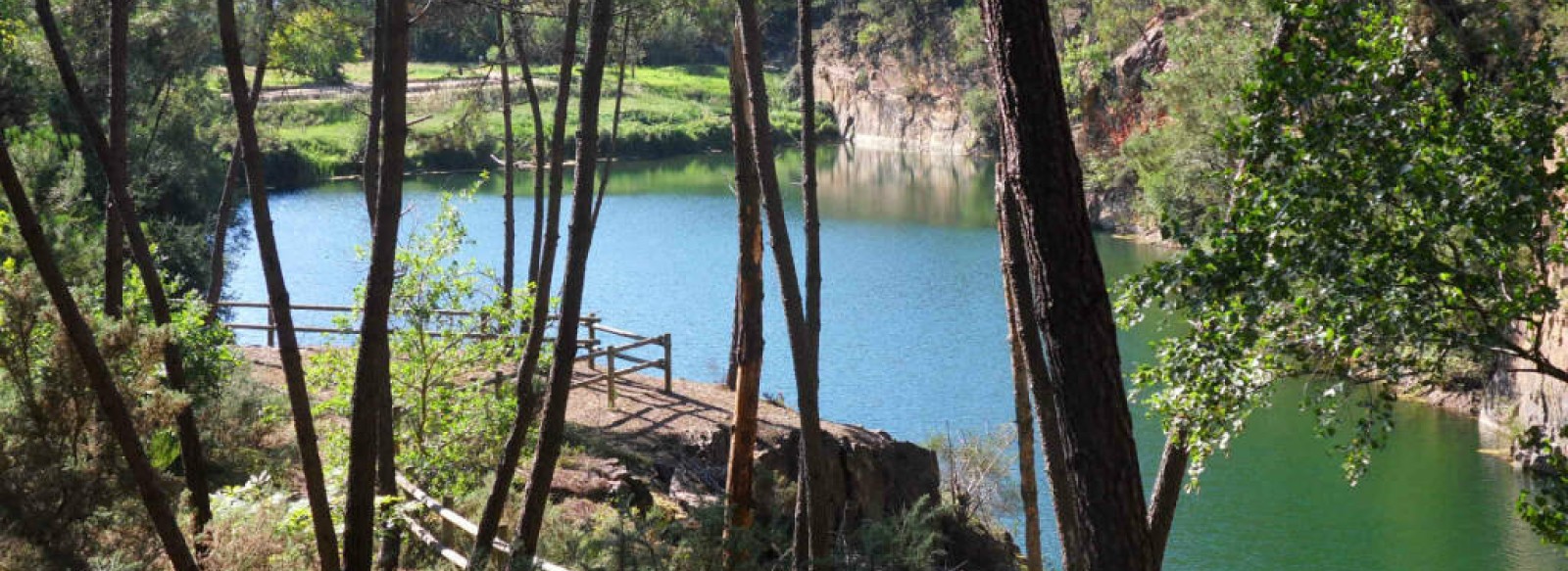
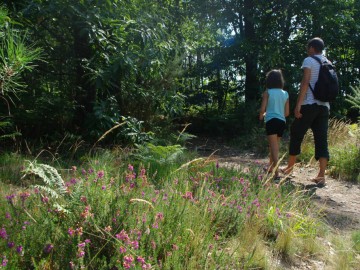
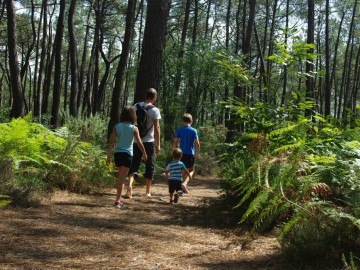
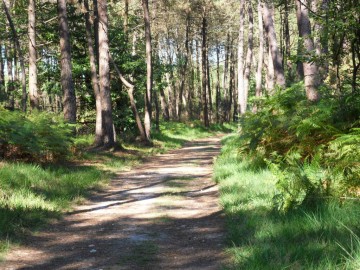
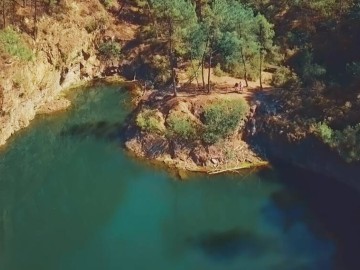
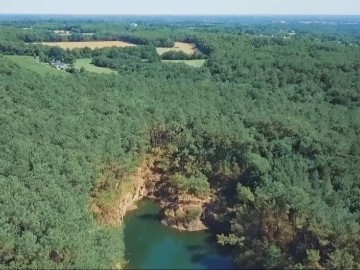
In the middle of a large pine forest, it's a great place to recharge your batteries, go for a walk or have a picnic. You'll find peace and quiet as you make your way along the little paths, and the beauty of the landscape as you discover the reactivated quarry, with its exceptional shade of blue blending with the ochre of the cliffs.
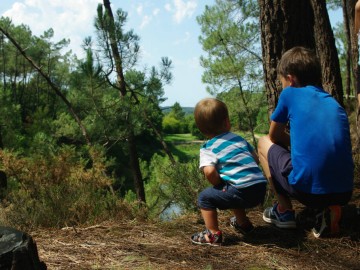
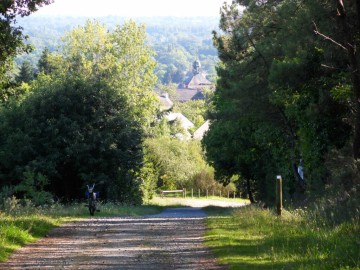
Further along the path, you can see the bell tower of the abbey church of Saint-Gildas-des-Bois .... and, in fine weather, ..... the bridge at Saint-Nazaire.
The quarry
Quarrying at Saint-Gildas-des-Bois ended in the 1970s. In the early days, the men worked the rock with sledgehammers, but the advent of explosives quickly boosted output. The shale sandstone that was mined was transformed into tarmac and gravel for road repairs and the railways. The stones were also used to build houses in St-Gildas-des-Bois. Other, much smaller holes than those in the quarry can be found in the forest, bearing witness to the use of the stones by local people long before the quarry was opened. The pit, which has now been filled with water, is 25 m deep.
The Calvary
In 1886, the Pope granted an extraordinary jubilee allowing bishops and priests to organise various events designed to rekindle the faith of their flocks. To mark the occasion, the parish priest of Saint-Gildas-des-Bois decided to erect a Calvary on the Bernugat hills. The parishioners were invited to take part. They were asked to cart to Bernugat all the debris from the renovation of the abbey church and the earth from the relocation of the cemetery, in order to build a mound for the crosses. On 22 October 1886, 3 crosses were planted. The central cross was made by the brothers from a magnificent tree base donated by the community. The Christ came from the old cross in the cemetery. Bernugat was now a consecrated place. Over the years, the weather took its toll on 2 crosses. They were not replaced, but a statue of the "Ecce Homo" now stands on the site of one of them.
The pines
The commune of Saint-Gildas-des-Bois was once surrounded by woods, which were cut down in the Middle Ages to extend the area under cultivation. At the end of the 1800s, Louis Philippe d'Orléans bought the land for his private estate and opted to plant maritime pine. This was not a random choice. The soil was so poor and acidic that the tree quickly thrived. Nature gives plants the same opportunities to grow, but not all plants have the same capacity to live. It's the hard law of survival of the fittest! So the maritime pine knows how to hold its own, denying light to other plants that want to compete with it.
Health trail
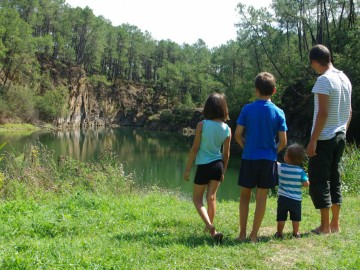
Bernugat is a meeting place for families and sports enthusiasts alike. This 96-hectare forest is the ideal place to recharge your batteries on the fitness trail, while the little ones enjoy the games.
Further along the path, you can see the bell tower of the abbey church of Saint-Gildas-des-Bois .... and, in fine weather, ..... the bridge at Saint-Nazaire.
The quarry
Quarrying at Saint-Gildas-des-Bois ended in the 1970s. In the early days, the men worked the rock with sledgehammers, but the advent of explosives quickly boosted output. The shale sandstone that was mined was transformed into tarmac and gravel for road repairs and the railways. The stones were also used to build houses in St-Gildas-des-Bois. Other, much smaller holes than those in the quarry can be found in the forest, bearing witness to the use of the stones by local people long before the quarry was opened. The pit, which has now been filled with water, is 25 m deep.
The Calvary
In 1886, the Pope granted an extraordinary jubilee allowing bishops and priests to organise various events designed to rekindle the faith of their flocks. To mark the occasion, the parish priest of Saint-Gildas-des-Bois decided to erect a Calvary on the Bernugat hills. The parishioners were invited to take part. They were asked to cart to Bernugat all the debris from the renovation of the abbey church and the earth from the relocation of the cemetery, in order to build a mound for the crosses. On 22 October 1886, 3 crosses were planted. The central cross was made by the brothers from a magnificent tree base donated by the community. The Christ came from the old cross in the cemetery. Bernugat was now a consecrated place. Over the years, the weather took its toll on 2 crosses. They were not replaced, but a statue of the "Ecce Homo" now stands on the site of one of them.
The pines
The commune of Saint-Gildas-des-Bois was once surrounded by woods, which were cut down in the Middle Ages to extend the area under cultivation. At the end of the 1800s, Louis Philippe d'Orléans bought the land for his private estate and opted to plant maritime pine. This was not a random choice. The soil was so poor and acidic that the tree quickly thrived. Nature gives plants the same opportunities to grow, but not all plants have the same capacity to live. It's the hard law of survival of the fittest! So the maritime pine knows how to hold its own, denying light to other plants that want to compete with it.
Health trail
Bernugat is a meeting place for families and sports enthusiasts alike. This 96-hectare forest is the ideal place to recharge your batteries on the fitness trail, while the little ones enjoy the games.
Contact
Bernugat
44530 SAINT-GILDAS-DES-BOIS
FRANCE
44530 SAINT-GILDAS-DES-BOIS
FRANCE
Practical information
Category
Remarkable viewpoint / panorama / peak