

LES OISEAUX DU TERRITOIRE

Our region, with its estuary, ocean, marshes, mudflats and meadows, is an ideal place for many animal, plant and bird species. If you take the time to observe, you'll be able to see species that aren't always found elsewhere. (Please respect them and take care of them and their environment).

The dyke at Corsept, for example, is an excellent place to observe a number of species, including :

In spring/early summer :

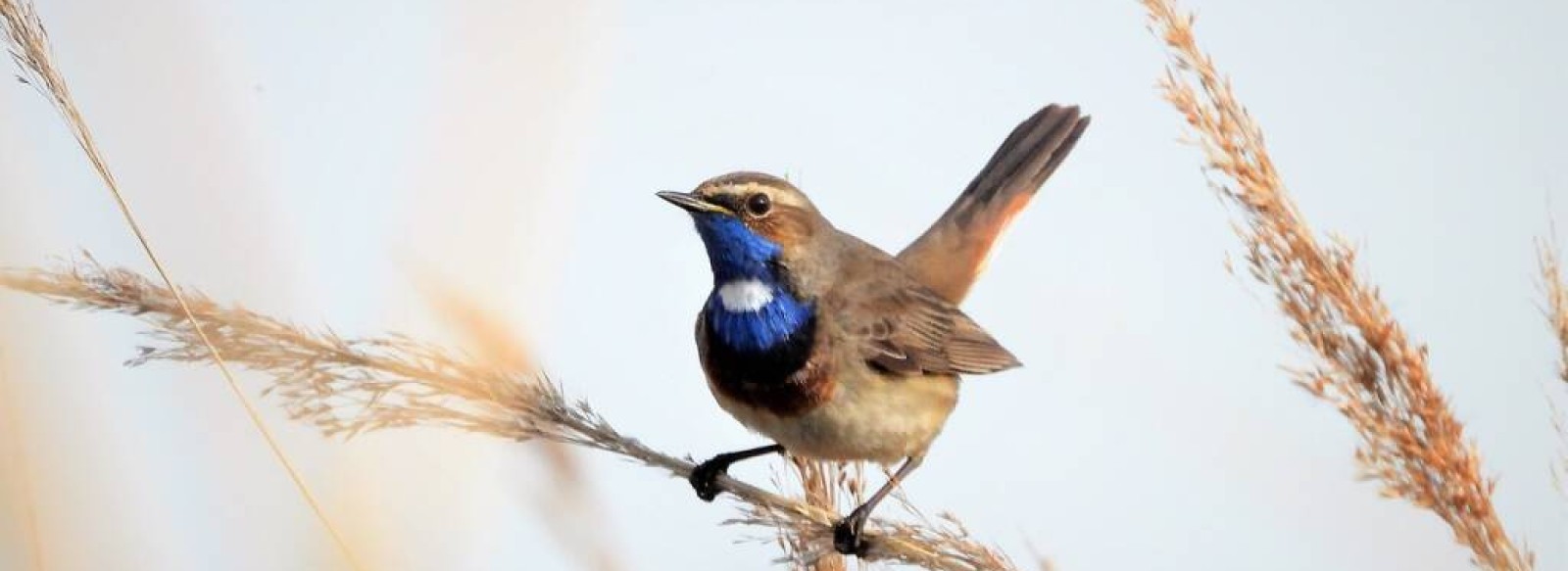
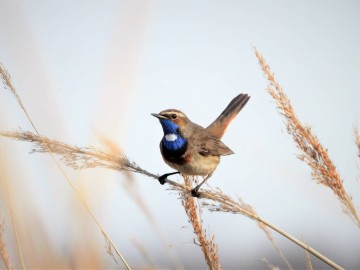
The Blackbird
This is a magnificent little migratory bird, easily recognisable, especially the male, which has a magnificent blue throat. It runs across the ground like a mouse and is an outstanding singer! It can be found in wet and marshy areas with low bushes and muddy ditches (photo 1).

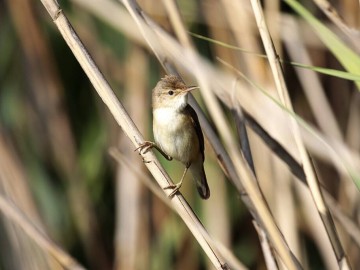
Common Reed-Warbler
A small brown migratory bird. It likes the tall vegetation of marshes and ponds (photo 2).

Jonc's Cisticola
This is one of Europe's smallest birds, yet it stands out for its flight and typical song. An insectivore, it also eats seeds and lives mainly in open, flooded meadows or marshy areas.


In autumn and winter (mainly in reedbeds or meadows):

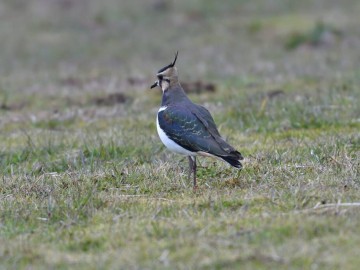
The Crested Lapwing
The Crested Lapwing is a magnificent bird that is hard to confuse with any other species. It has a coat with a metallic green and purple sheen and a typical long, thin, curved crest. It is particularly fond of large meadows on the edge of water (preferably unsalted) where there is an unobstructed view. (photo 3)

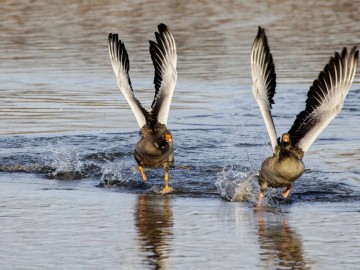
Greylag geese
Greylag geese are cousins to our domestic geese and are the largest of the European wild geese. They migrate here in winter and are attracted to our estuary areas. (photo 4)

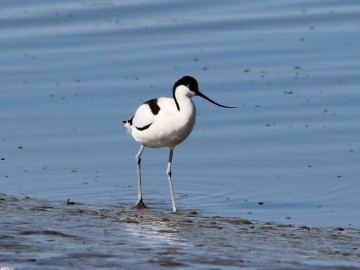
Avocets
Avocets are fairly large birds (around 40cm and 70cm wingspan). They feed on invertebrates in the water and mud. It is an elegant bird, recognisable by its thin, upward-curving black tail. It likes to live in areas close to the coast, between estuaries and marshes. (photo 5)

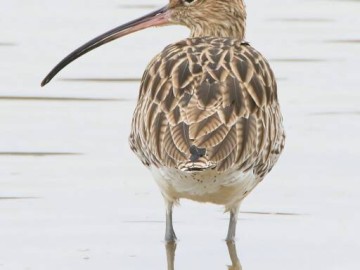
The curlew
The curlew is a large migratory bird that comes to our coast to winter. It can be seen on the mudflats of the estuary. It can be recognised by its long, downward-curving beak. It is on the red list of threatened species. (photo 6)

Black-tailed godwit
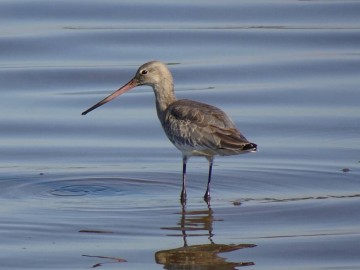
This bird is found in wetlands. It is a large, long-legged wader with a long, straight beak with an orange-brown base. They are on the red list and considered highly threatened. Nevertheless, in winter, we have the pleasure of observing them in our region, and they are very fond of our area. You can spot them on the Corsept dyke, but also in the port of Paimbœuf at low tide or on the Courance beach in Saint-Brevin. The Pays de la Loire region is working to protect the species. For more information, visit >>>>> (photo 7)

Contact

Location icon

44560 CORSEPT
FRANCE

Practical information

Category

Marsh - wetland / salt marshes

Location

Other: Nature

CARNUTA
Location icon
Jupilles
Réservable en ligne
Carnuta
Loire Odyssée : Centre de découverte
Location icon
Loire-authion
Réservable en ligne
Dorothée Mouraud / Destination Angers
Musée de la Faïence et de la Céramique
Location icon
Malicorne-sur-sarthe
Réservable en ligne
@Pascal Beltrami - Tourisme en Sarthe
Musée des métiers
Location icon
Mauges-sur-loire
Réservable en ligne
© FRANCOIS CRAMPON PHOTO VIDEO
Alexandre Lamoureux
Plage de la Paracou
Location icon
Les Sables-d'olonne
Antoine Martineau
Parc de la Vallée de l'Oudon
Location icon
SegrÉ-en-anjou Bleu
@Office de Tourisme de l'Anjou bleu
PLAGE DE KER VILLÈS
Location icon
Saint-nazaire
Alexandre Lamoureux
Plage de Crève Cœur
Location icon
La Bernerie-en-retz
Mélanie Chaigneau
OTI La Baule Guérande